
Let the paint drip
It's just paint

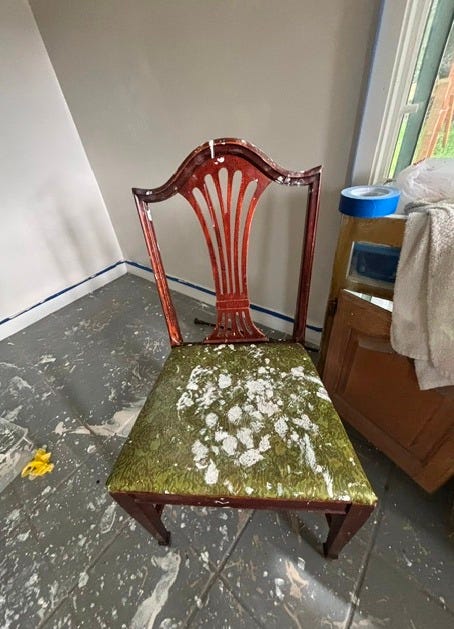
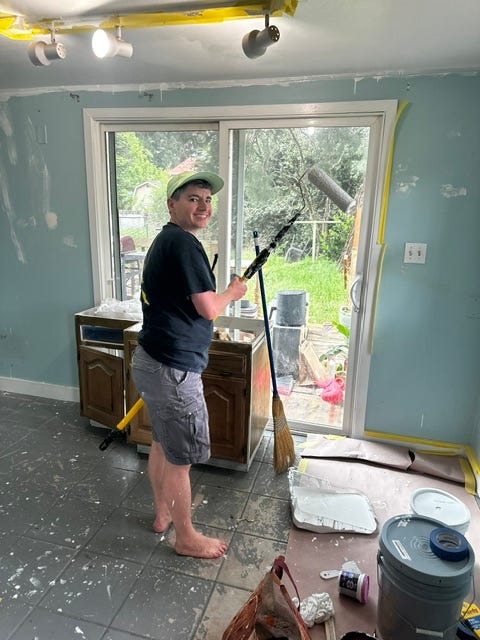
“You really hate those floors, don’t you?” My wife commented on the uncovered floors covered with drips and dollops of wet paint.
I didn’t cover the floors because I was and still am committed to ripping those awful cracked tiles out and starting over.
I caught drips when they were on walls, but allowed the paint to splatter at my feet.
I stood on a dining room chair to reach the ceiling, and stepped on it with my bare feet. Now that chair is covered in feet prints.
When I look at the chair, I see my presence on it as I stretched to push paint into the corners of the room. I don’t want to erase myself in what I do—I want to be able to see where I was when I did something. I also just like being a total mess, and bathing in paint (see my previous post).
When painting a room, I’m always fighting against two things:
Paint drying. When paint dries too quickly, the drips can’t be wiped away, the bristles of the brush stiffen into a protest. The paint doesn’t roll smoothly onto the wall; instead, it globs up, half dried before it hits the wall.
Paint where it does not belong. A good painter is constantly fighting gravity. Paint wants to run like tears down a wall, drip drip drip until it hits the ground or dries. Even when drop cloths are spread gingerly over every surface, its common that a drip will push its way through the fabric and onto the floor. This is why you should always carry a wet washcloth with you, ready to wipe defects away.
The goal with house painting is to erase what’s underneath with a thick, even coat. When done well, paint creates a fresh start, and can hide a multitude of sins.
This time, I enjoyed watching the floor decorate with drips. I enjoyed the way my feet marked the old chair forever. There is a freedom in deciding to start over. These tiles suck, so let’s not protect them. This chair sucks, so lets ruin it. There is a freedom in allowing drips to form and letting them remain.
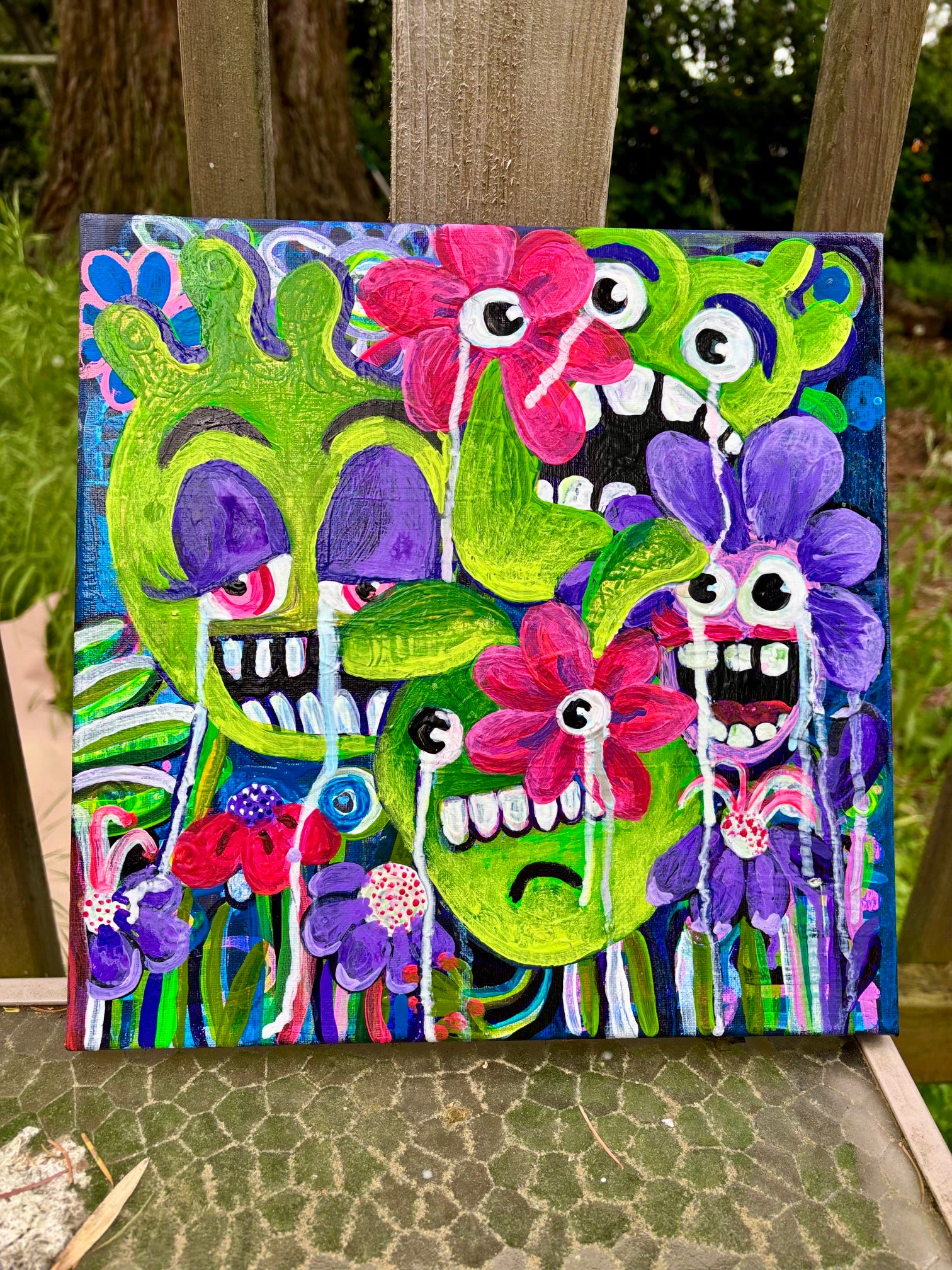
I think this is why I love drips in my paintings. You can guide them, but can’t control them. They move like water over a cliff face—always seeking the ground, but stopping when they dry up.
When I look at drips on a painting, I see the way I held the painting to encourage movement. I see my hands on the side of the canvas guiding watery paint into interesting shapes.
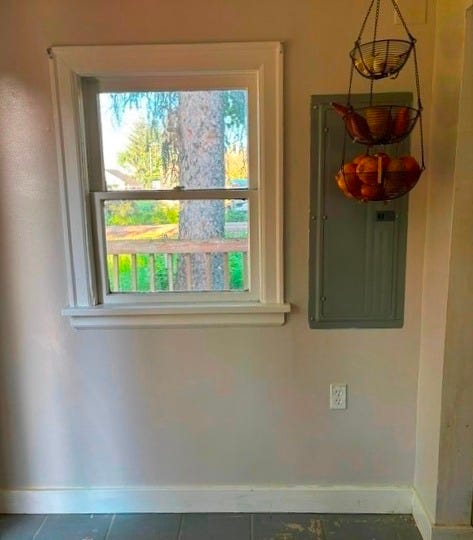
In my mudroom, I wiped all of the drips away.
After I’m done, and all the paint has dried, I return to where I started and look at what I’ve done with fresh eyes. There are usually some places where the paint is thin and could use another coat. There are usually a couple of drips that I missed. When I’m looking at a painting, I sense that something is wrong and experiment with different colors and shapes until it feels right.
I’m not sure what’s next, both in painting and in life, but I know that painting helps iron out the furrows in my brow. It forces presence. I have to pay attention to what is happening in this specific moment in this specific place. I have to look closely in order to truly see what is happening. When I’m done, I am filled with the pride of having finished something.
Thanks for reading. I imagine that all of you readers are sitting around my living room. I have my paint brush in hand, and I am sharing my thoughts about painting with you while you sip coffee or tea. It's comforting to know that you are out there, choosing to open this link.
If you feel inspired, you can subscribe. Subscribing just means that my thoughts go directly to your inbox. I don’t spam you, or share your email address with the opps.
Until next time,
Adina
.